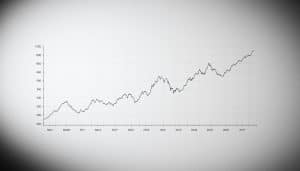


Meme Lord price forecasts extend as far as 2030, but they should be treated as scenarios rather than dependable targets. The available information describes a meme cryptocurrency that aims to combine community interest with practical features, including smart contracts, cross-chain compatibility and a supply-burning mechanism. Those descriptions and the forecasts below have not been independently corroborated with an identified contract address, exchange record or current market feed.
Meme Lord price prediction through 2030
The published outlook reports a range of $0.005–$0.012 for 2025, followed by $0.025–$0.045 for 2026–2027. Its longer-term scenario places Meme Lord at $0.15–$0.55 by 2030. These ranges are reported projections, not guaranteed outcomes.
The wide spread between the conservative and optimistic outcomes is the most useful part of the forecast. It shows how sensitive a speculative token can be to changing assumptions. A price target alone cannot tell you whether there is sufficient liquidity to trade at that price, whether development milestones have been delivered or whether the asset remains accessible in your market.
What could affect the forecast?
The project description identifies community support, technical development, competition, regulatory developments and the wider cryptocurrency market as possible influences on Meme Lord’s price. It also presents cross-chain compatibility, community governance and automatic token burns as intended points of differentiation. These features may form part of the investment thesis, but their operation and adoption need to be verified independently before you rely on them.
Community activity
Meme coins can depend heavily on attention and community participation. For Meme Lord, the stated thesis assumes that an active community will continue supporting awareness, governance and liquidity. That assumption can weaken quickly if engagement declines or moves to competing tokens. Social activity is therefore better treated as a risk indicator than as proof of lasting demand.
Product development
The outlook links future value to continued technical progress and additional utility. Before acting on that argument, check whether the relevant software, integrations and governance tools are live and usable. A roadmap describes intended work; it does not by itself establish that a feature has shipped, is secure or has meaningful adoption.
Supply mechanics
The project is described as using automatic burns to reduce token supply. A declining supply does not guarantee a rising price because demand, liquidity and holder behaviour also matter. You would need current on-chain records and the token’s verified contract rules to assess whether burns occurred as described and whether the mechanism can change.
Competition and regulation
Meme Lord is presented as competing with established meme coins while trying to offer more utility than simple transfers. That positioning does not ensure market share. Competing projects can attract attention, liquidity and developers, while regulatory changes can affect access and trading conditions. The available forecast therefore depends on conditions that cannot be known in advance.
How to assess the projection
Start by confirming the asset’s identity. A verified contract address, official documentation and consistent exchange listings help distinguish the intended token from similarly named assets. Then examine current liquidity, holder concentration and trading venues. A displayed price can be misleading when only a small amount can be bought or sold near that level.
Next, separate delivered features from planned features. Look for working applications, published contract code, credible security documentation and on-chain evidence of the stated supply changes. Marketing activity and community size may provide context, but neither substitutes for evidence that the token’s core mechanics operate as described.
Finally, test the forecast as a set of conditions. The optimistic range assumes favourable adoption, continued development and supportive market conditions. The lower range still assumes that the token remains operational and tradable. If any of those assumptions fail, outcomes could fall outside every published range, including a substantial or complete loss.
Risk and portfolio considerations
The source recommends limiting Meme Lord exposure to 1–2% of a crypto portfolio because of volatility. That reported allocation is not personalised financial advice and may still be unsuitable for you. Your financial position, risk tolerance, time horizon and ability to withstand losses matter more than a generic percentage.
Dollar-cost averaging is also presented as an alternative to investing a lump sum. Spreading purchases can reduce dependence on a single entry price, but it cannot prevent losses if the asset declines over time. Position sizing, custody risk, liquidity and the possibility of losing the entire investment remain important considerations.
Bottom line
The Meme Lord forecast offers a broad speculative path through 2030, not a reliable valuation. Its outcome depends on community demand, delivered utility, supply mechanics, competition, regulation and the wider market. Before treating any target as actionable, verify the token’s identity and current market data through primary, independently accessible records. If that evidence is unavailable, the prudent conclusion is that the forecast cannot be validated.